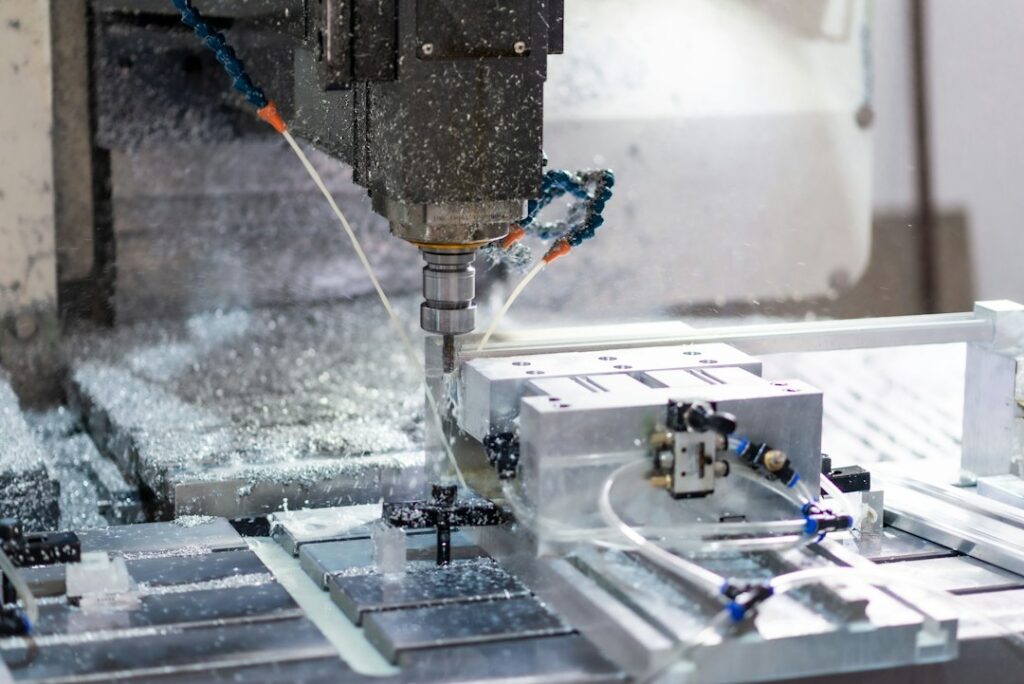
3D printing rarely works alone. Once a design needs a production material, a cosmetic finish or quantities in the hundreds and thousands, conventional processes take over. The usual path runs from a printed master pattern, through soft or bridge tooling, to a hardened injection mold, with CNC machining filling the gaps wherever tight tolerances or specific alloys are required.
Where each process fits
| Process | Typical quantity | Why use it |
|---|---|---|
| RTV silicone tooling | 10–50 per mold | Fast, cheap castings in production-like urethanes |
| Epoxy tooling | 50–several hundred | More durable than silicone, still quick to make |
| Injection molding | Hundreds to millions | Real production resins at the lowest piece price |
| CNC machining | 1 to thousands | Tight tolerances in almost any metal or plastic |
The guides below explain how each method works, what it costs in time and effort, and the design rules that keep parts manufacturable.